
Buying Pre-Construction in Venezuela: 5 Essential Checks Before You Put Down a Deposit

By: Venezuela Advisor — Published 2026 · Share
- Why pre-construction attracts so much interest
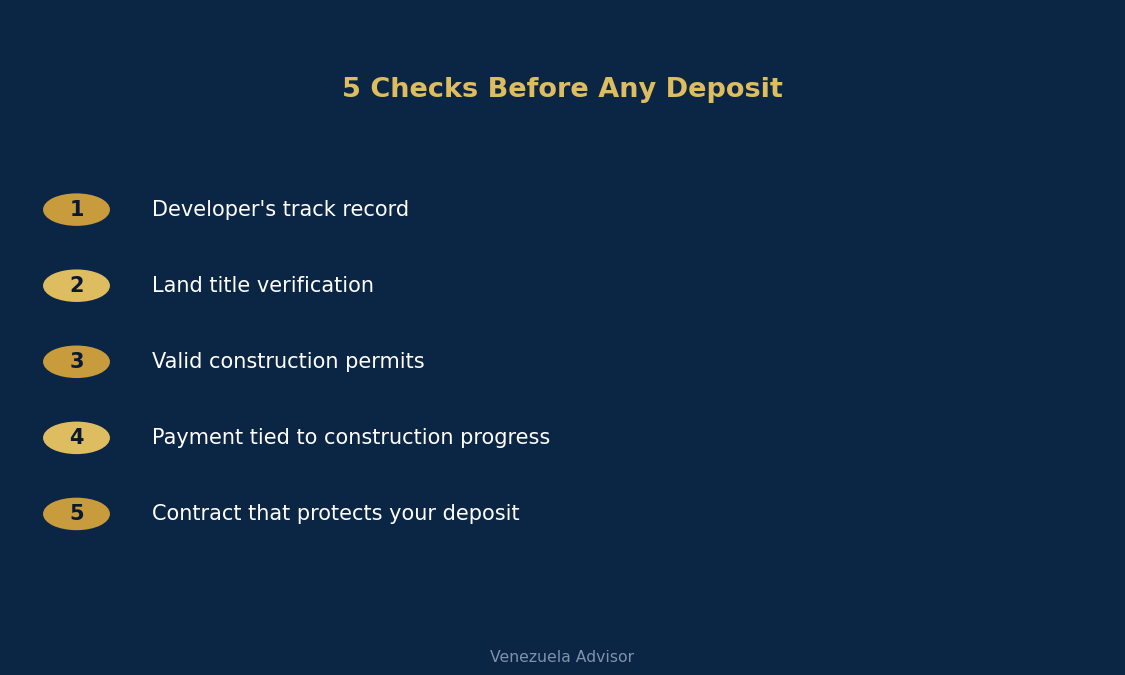
- 1–5. Five checks before any deposit
- Putting the five checks into a single working process
- Why permit verification takes longer than buyers expect
- What a payment schedule that protects you looks like
- The silent risk: spec changes between contract and delivery
- Visiting the site during construction
- Insurance considerations specific to pre-construction
- What happens if you need to walk away
- Glossary
- Key takeaways
Why pre-construction attracts so much interest
Pre-construction projects typically offer lower price-per-m² than finished units, which is doubly attractive in a market where entry prices are already low compared to other regional capitals, as detailed in our Caracas neighborhood guide. But buying off-plan adds a layer of risk that simply doesn't exist when purchasing a finished, occupied unit: you're partly betting on someone else's future execution.
This isn't a reason to avoid pre-construction entirely — some of the better value opportunities we've seen clients capture came from exactly this kind of purchase. It's a reason to approach it with a more structured verification process than you'd apply to a finished unit, precisely because the thing you're buying doesn't exist yet in physical form for you to inspect. Every check described in this guide exists specifically to compensate for that absence of a physical object to walk through and evaluate directly, and together they form a repeatable process you can apply to any project you're considering.
1–5. Five checks before any deposit
Each of these five checks addresses a distinct failure mode we've seen play out in real transactions — they're not redundant precautions, and skipping any one of them leaves a specific, predictable gap in your protection.
- Developer track record: have they delivered previous projects on time and at the promised quality? Visit finished projects from the same developer if possible, and speak directly with previous buyers.
- Land title: confirm with an independent attorney — not the one the developer introduces you to — that the developer actually owns or holds a constituted legal right to build on the specific parcel.
- Valid construction permits: a project without complete municipal permits can stop mid-construction, leaving your money trapped in an incomplete building for years.
- Payment schedule tied to real construction progress: see the section below.
- A contract that protects your deposit: it must specify clear, enforceable penalties if the project is significantly delayed or never delivered, and a defined path to at least partial recovery if you need to exit.
Why checking the developer's track record matters more than it seems
A developer's history isn't just a reputation question — it's a predictor of how they'll behave when construction inevitably hits an unexpected cost or delay. A developer who has weathered previous projects to completion, even imperfectly, has demonstrated a capacity to problem-solve under pressure that a first-time developer, however well-capitalized on paper, simply hasn't yet proven. Ask specifically about projects that ran into trouble, not just their showcase successes — how a developer handled their worst project tells you more than how they handled their best one, and a developer willing to discuss that history candidly is usually a better sign than one who insists every project has gone perfectly.
Why the land title check can't be skipped, even for a "known" developer
Even developers with a strong reputation can be building on land with an unresolved title dispute, an inheritance claim, or a boundary discrepancy that predates their involvement entirely. This check protects you regardless of how much you trust the developer's intentions, because a title problem doesn't care about anyone's good faith — it simply prevents a clean transfer of ownership to you at the end, no matter how well-intentioned every party involved turns out to be.
Putting the five checks into a single working process
In practice, these five checks aren't performed in strict isolation — they inform each other. A developer with a strong track record makes a clean land title more likely, though never guaranteed. A well-drafted payment schedule is only enforceable if the underlying contract itself is sound. Treating this as one integrated due diligence process, coordinated by a single attorney who sees the whole picture, produces a meaningfully better outcome than having different people check different boxes without anyone connecting the findings.
We've seen buyers hire a notary to review the contract, a separate person to check the title, and rely on the developer's own claims for permits — three disconnected checks that each individually passed, while the combination still left the buyer exposed to a risk none of them was specifically looking for. A single attorney managing the full process, with explicit responsibility for connecting these dots, closes that gap.
Why permit verification takes longer than buyers expect
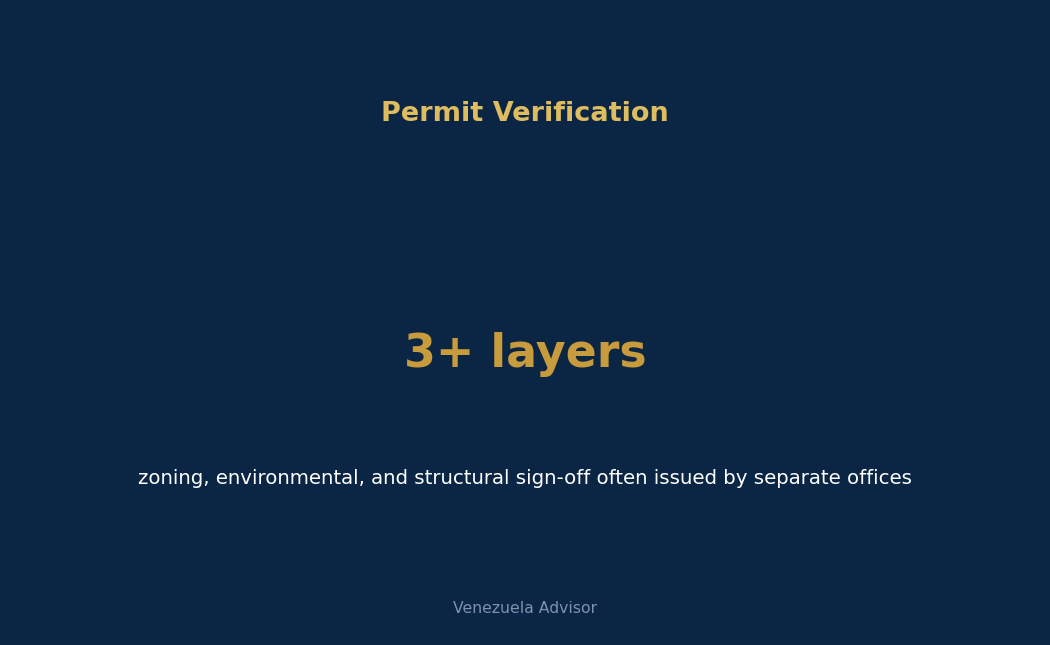
Confirming that a project has "complete" municipal permits sounds like a simple checkbox, but in practice it often requires cross-referencing several separate approvals — zoning compliance, environmental clearance where applicable, structural engineering sign-off — that may be issued by different offices at different times. A developer may genuinely believe their permitting is complete while missing a step that only becomes apparent when an attorney requests the full permit file directly from the municipality rather than accepting the developer's summary of it.
This is one of the areas where paying for a few extra hours of attorney time upfront is, in our experience, one of the highest-value expenses in the entire pre-construction process — far cheaper than discovering a permitting gap after several payment milestones have already been released.
What a payment schedule that protects you looks like
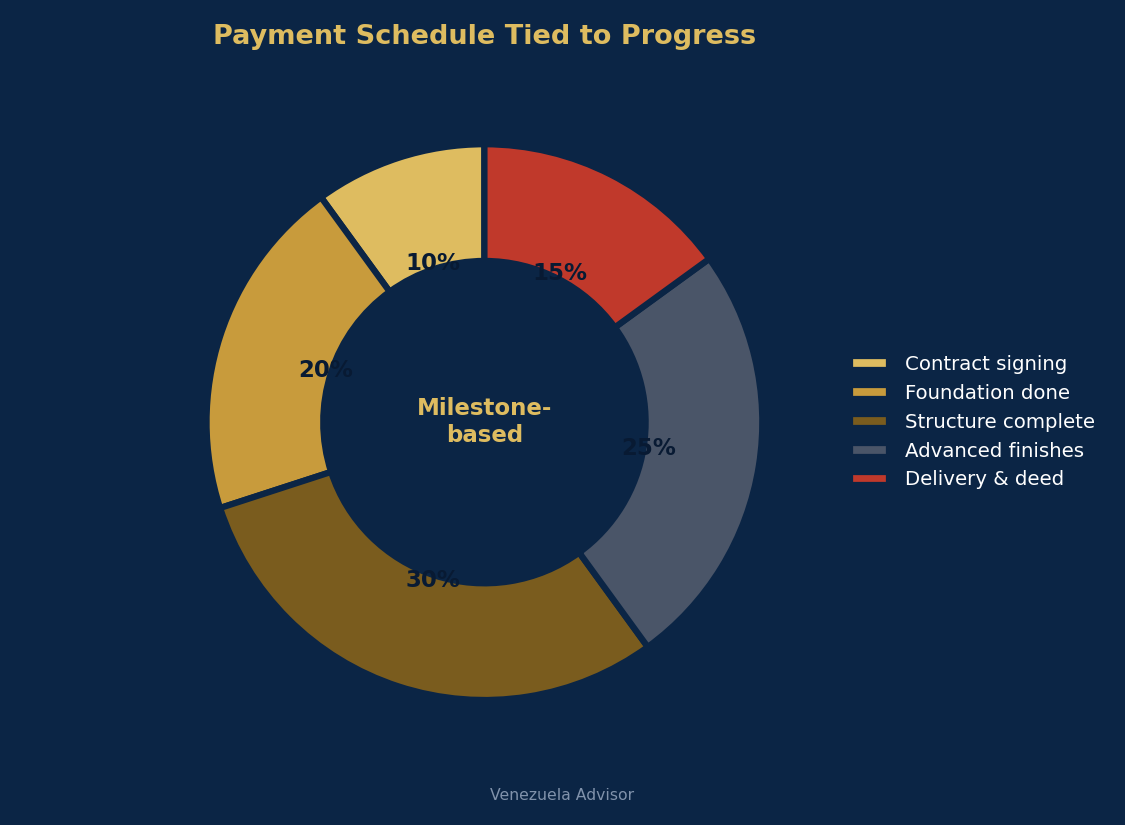
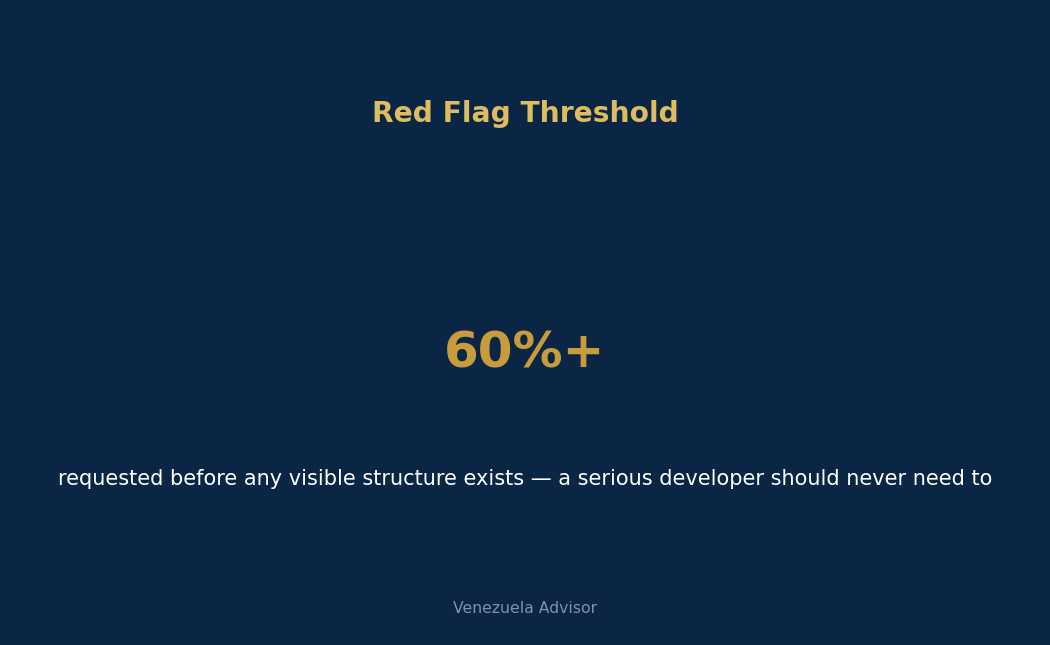
The payment schedule is, in our experience, the single most important protective mechanism in a pre-construction contract — more important, in practical terms, than the price itself. A well-structured schedule turns your capital exposure into a series of small, verifiable bets rather than one large, blind one.
| Construction milestone | % of payment released |
|---|---|
| Contract signing / reservation | 10% |
| Foundation complete and verified | 20% |
| Structure complete (all levels) | 30% |
| Advanced finishing work | 25% |
| Delivery and protocolization | 15% |
Who verifies each milestone before you pay
A schedule tied to construction progress is only as good as the verification behind it. Ideally, your attorney — or an independent engineer they engage — physically confirms each milestone before authorizing the next payment release, rather than relying solely on the developer's own progress reports or photographs, which can be staged or simply outdated by the time you see them.
What happens if the developer falls behind schedule
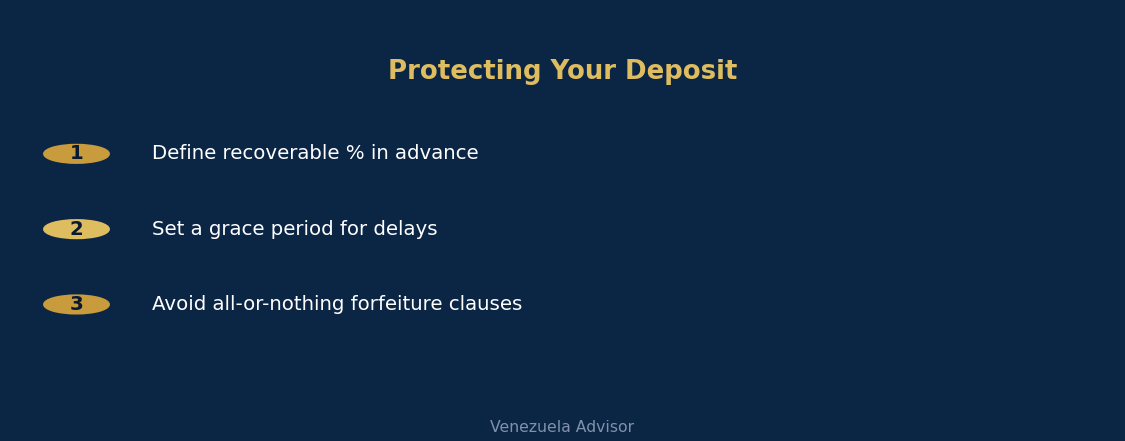
Delays happen even to well-run projects, and a reasonable contract should distinguish between minor, explainable delays and the kind that signal real trouble. Building in a defined grace period, after which specific penalties or a right to exit the contract kick in, protects you without treating every delay as an automatic crisis — while still giving you real leverage if a delay stretches well beyond what's reasonable.
The silent risk: spec changes between contract and delivery
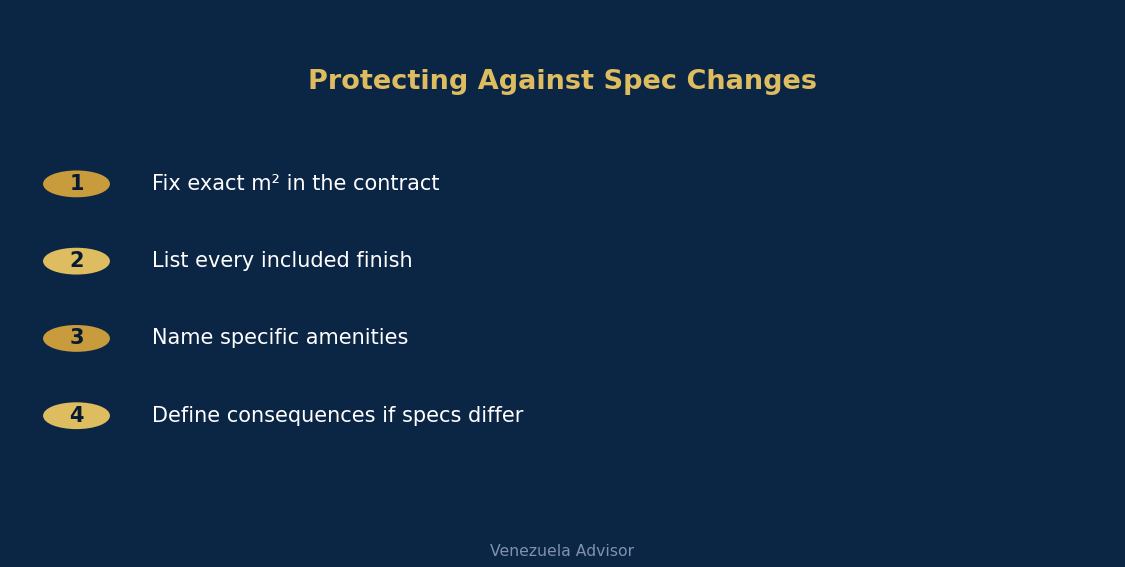
It's not unusual for a developer to modify finishes, square footage, or amenities between contract signing and final delivery relative to what was promised in the original plans and renderings — sometimes for legitimate cost reasons, sometimes from simple contractual carelessness. The contract must precisely fix square footage, finishes, and included amenities, and clearly establish the consequences if the final product differs from what was agreed in writing.
The renderings and marketing materials that first attract a buyer are, unfortunately, not legally binding on their own in most jurisdictions, Venezuela included. What protects you is the specific, itemized language in the contract itself — a finishes schedule listing exact materials and brands, a floor plan with dimensions, a written amenities list — not the general impression created by a beautifully rendered sales brochure. Treat the brochure as marketing, and the contract's itemized annex as the only document that actually binds the developer to what you saw in it.
Visiting the site during construction
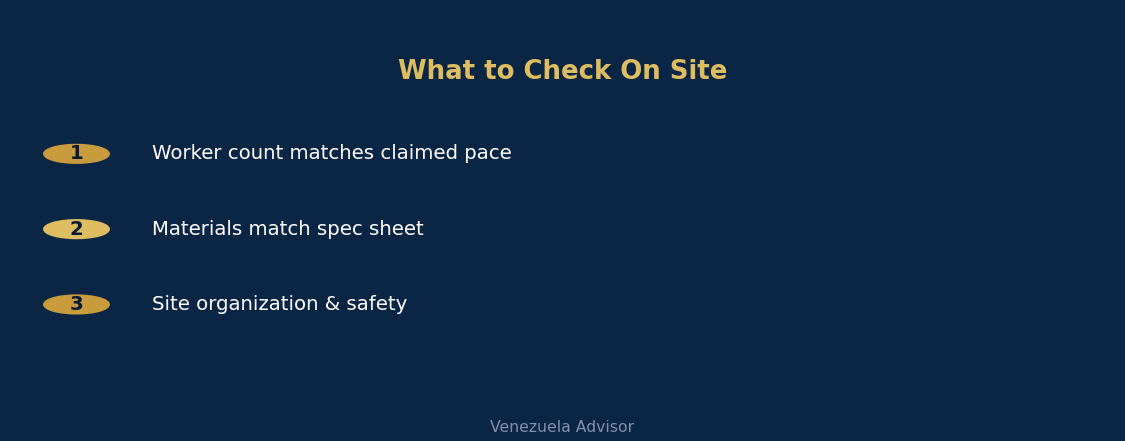
Beyond the paperwork, we strongly recommend visiting the physical construction site at each major milestone, not just relying on photographs the developer provides. A brief site visit often reveals things photographs conveniently omit — the pace of actual work, the quality of materials being used, whether the site matches the progress claimed in the developer's payment request. Photographs can be taken from flattering angles, cropped to exclude problem areas, or simply reused from an earlier stage of construction; a physical presence on site removes all of that ambiguity in a way no amount of documentation can fully replace.
What to look for during a site visit
- Whether the number of workers on site is consistent with the claimed construction pace.
- Visible material quality — does what's being installed match the specification sheet in your contract?
- General site organization and safety — a chaotic, poorly managed site is often a leading indicator of management problems that will eventually surface elsewhere in the project, from finish quality to delivery timing.
If you can't visit in person because you live abroad, a trusted local attorney or a paid independent inspector can perform this verification on your behalf — a modest cost compared to the capital already committed to the project, and one of the better investments you can make in protecting that capital.
Insurance considerations specific to pre-construction
An often-overlooked detail: standard homeowner's insurance typically doesn't apply until a property is complete and occupied, which means the period between your deposit and delivery carries risks — construction defects, site accidents, force majeure events — that may not be covered by any policy you hold. Ask your attorney whether the developer carries builder's risk insurance covering the structure during construction, and what recourse you'd have if damage occurred to the unit before delivery.
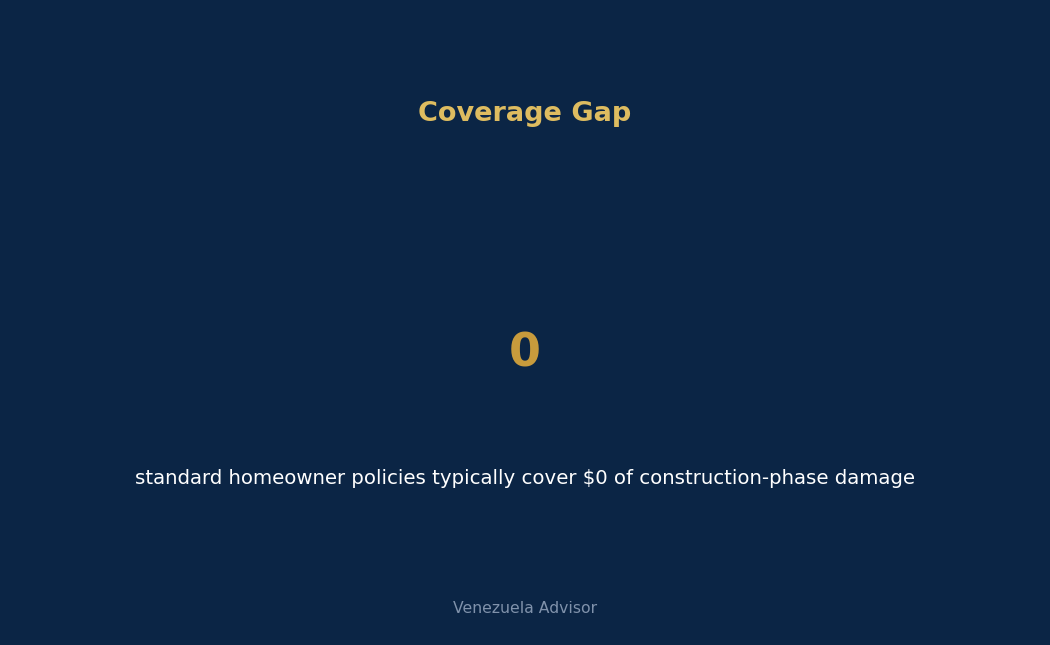
This question is easy to forget precisely because it feels like the developer's problem, not yours — but if the structure you've already paid several milestones toward is damaged before delivery, whether by accident or a natural event, the absence of adequate builder's risk coverage becomes very much your problem as well.
What happens if you need to walk away
Even with careful due diligence, circumstances change — a buyer's financial situation shifts, or red flags emerge mid-construction that weren't visible at signing. A well-drafted contract should specify, in advance, what portion of your deposit is recoverable under which circumstances, rather than leaving this to negotiation after a dispute has already begun. This clause is easy to overlook when you're excited about a project, and exactly the kind of detail that matters most once something has gone wrong.
We generally recommend negotiating for at least partial deposit recovery in the event of developer-caused delays beyond an agreed threshold, since the alternative — an all-or-nothing forfeiture clause — places the entire execution risk on the buyer with no corresponding protection. This single clause, more than any other in the contract, determines how costly it is to change your mind or protect yourself if the project stops meeting the standard you agreed to at signing.
Glossary
Off-plan / pre-construction: a property purchased before or during construction, based on plans and renderings rather than a finished unit.
Milestone-based payment: a payment schedule tied to verified construction progress rather than fixed calendar dates.
Spec drift: the gradual divergence between what was originally promised in plans and what's actually delivered.
Builder's risk insurance: a policy covering a structure specifically during its construction phase, distinct from standard homeowner's insurance that applies only once a property is complete.
Key takeaways
- Pre-construction can offer better pricing, but shifts execution risk onto the buyer in a way a finished unit purchase doesn't.
- Verifying the developer, the land title, and permits matters as much as negotiating price — and must happen before, not after, signing.
- The contract should tie payments to real, verifiable construction progress, never to fixed calendar dates.
- An independent site visit at each milestone catches problems that photographs alone will not reveal.
- Specific, itemized contract language protects you far more than any rendering or sales brochure.
- Confirm builder's risk insurance coverage during the construction period, when your standard homeowner's policy likely doesn't yet apply.
- Coordinate all five checks through a single attorney who sees the full picture, rather than splitting them across disconnected reviewers.
If you're evaluating a pre-construction project in Venezuela, we can help you run this exact checklist against the specific developer and project before you commit any capital — including coordinating an independent site visit if the project is already underway, and requesting the full permit file directly from the relevant municipality rather than relying on a developer's summary of it. Pre-construction can be one of the better entry points into the Caracas market for the right buyer; it just requires more structured verification than a finished unit does.